
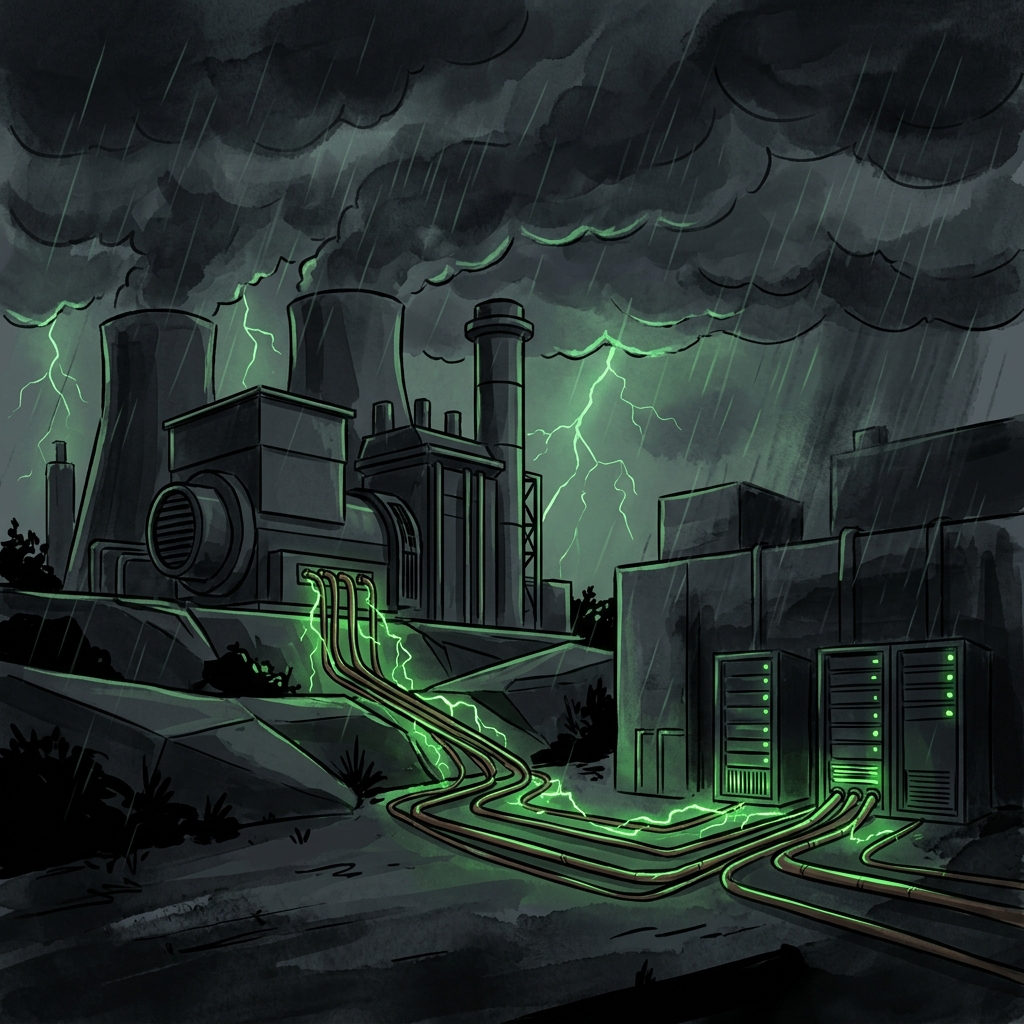
- Behind-the-Meter Power: To bypass local utility grid constraints, xAI has deployed dozens of natural gas-fired turbines to power its Colossus supercluster.
- Grid Bottleneck: The deployment highlights the severe energy constraints facing AI training clusters, forcing operators to act as independent power producers.
- Regulatory Pressure: An EPA ruling in early 2026 invalidated the 'temporary portable' turbine loophole, forcing xAI to secure permanent air quality permits amid local legal challenges.
Powering Colossus Outside the Grid
Elon Musk's xAI has deployed dozens of mobile, natural gas-fired turbines to provide 'behind-the-meter' power for its massive AI supercomputer clusters. The Colossus supercomputer, located in Memphis, Tennessee, and its Colossus 2 expansion across the state line in Southaven, Mississippi, require hundreds of megawatts of continuous electrical power—demands that local municipal grids were unable to meet on the company's aggressive timeline.
Rather than waiting years for substation upgrades and grid interconnects, xAI opted to generate its own power on-site. The Memphis facility originally deployed up to 35 mobile gas turbines, eventually securing permits for 15 permanent installations. For the Colossus 2 expansion, xAI installed another block of gas turbines in Mississippi, combined with large-scale Tesla Megapack battery storage systems to act as a buffer for peak compute load.
The EPA Loophole Closes
This industrial-scale power generation has drawn scrutiny from environmental groups and regulators. In January 2026, the Environmental Protection Agency (EPA) issued a ruling stating that large methane gas turbines require air quality permits even if they are operated on a temporary or portable basis. This decision closed the regulatory loophole xAI had used to deploy the units quickly without full public review.
"AI developers are learning that compute capacity is no longer limited by wafer supply or software optimization, but by the raw physics of grid distribution. If you cannot get the power, you cannot train the model. Generating electricity locally is the only way to maintain competitive speed."
Energy Infrastructure Expert, Memphis Chamber
The NAACP and the Southern Environmental Law Center have filed lawsuits challenging the permits, claiming the turbine emissions disproportionately affect air quality in nearby communities and violate the Clean Air Act. Despite these challenges, xAI is moving forward with plans to build a dedicated 1.2-gigawatt natural gas power plant, signaling that local, independent power generation will be a key feature of future hyperscale AI training sites.
Editorial Transparency
This article is produced inside ELPA SPACE's controlled AI-assisted editorial workflow. The named human editor remains responsible for publication quality, sourcing, updates, and corrections.
The byline identifies the author and the editor. Author profiles explain background, editorial responsibilities, and disclosure notes.
AI tools may help with research organization, draft iteration, metadata, and quality checks, but factual claims must be checked against reliable sources.
The page is created to explain an AI infrastructure shift for readers who follow models, agents, compute, search, and media distribution.
Readers can challenge a claim through the corrections channel. Material corrections are reflected in the update date when needed.